
The glycemic index (GI) describes how much a carbohydrate-containing food raises blood sugar levels after consumption. In nutritional science, this concept is often discussed in connection with blood sugar regulation, sustained energy, and weight management.
But what exactly does this value actually mean? How is it measured? And what role does it play in everyday life? You can find out in this article.
Discover Verival breakfasts with high-quality carbohydrates now
What is the glycemic index?
The glycemic index (GI) of foods is a scientific measure of how much a carbohydrate-containing product affects our blood sugar levels. It shows how quickly and how much blood sugar rises after eating.
But what does that mean exactly? When we eat carbohydrates, they are broken down into glucose in the body. Glucose is a form of sugar and serves as the most important source of energy for our cells. It enters the body's cells via the blood and provides us with energy for thinking, movement, and all metabolic processes.
The glycemic index describes how quickly this glucose enters the bloodstream. Pure glucose, which has a GI of 100, serves as a reference value. Foods are classified on a scale from 0 to 100 based on their effect:
- A high GI means that blood sugar rises quickly and sharply.
- A low GI means a slower and more even rise.
It is important to note that the glycemic index only evaluates the speed of the blood sugar reaction under standardized laboratory conditions. It does not say anything about how nutritious or healthy a food is overall. A low GI does not automatically make a food “better,” just as a high GI does not necessarily make it “worse.”
How is the GI measured?
To determine the glycemic index of foods, test subjects eat a portion of a specific food containing exactly 50 grams of usable carbohydrates after an overnight fast. “Usable” means that only those carbohydrates that can actually be broken down into glucose in the body are taken into account.
Blood sugar is then measured at regular intervals over a period of about two hours. This produces a so-called blood sugar curve. It shows how much blood sugar rises and how quickly it falls again.
This curve is compared with the response to pure glucose, which serves as a reference value and has a glycemic index of 100. The decisive factor here is not only the highest measured value, but also how much and for how long the blood sugar is elevated overall.
Since everyone reacts differently to carbohydrates, the GI is not calculated from a single measurement. Instead, the results of several people are averaged. The official value is therefore an average value under controlled conditions.
In everyday life, we rarely eat food in isolation and under laboratory conditions. Therefore, the actual blood sugar response can vary from person to person and from meal to meal.
Difference between low, medium, and high GI
Foods are divided into three categories in classical literature:
- Low GI: below 55
- Medium GI: 55 to 70
- High GI: above 70
A high GI means that carbohydrates are quickly absorbed into the bloodstream. A low GI leads to a flatter, more even increase. A rapid rise in blood sugar is not necessarily a bad thing. After exercise, for example, a rapid rise in blood sugar can promote rapid recovery. However, for long-lasting concentration and sustained energy, for example in the morning, many people prefer a more even blood sugar curve.
What factors influence the glycemic index?
The glycemic index is not a fixed value. It can be influenced by various factors.
Food processing
The more processed a food is, the higher its GI often is. Finely ground flour is digested faster than whole grains. This causes blood sugar to rise more quickly.
A classic example can be seen at breakfast: coarse oat flakes (large flakes) are digested more slowly and have a lower GI than instant flakes. The structure of the grain therefore plays an important role.
Combination with other macronutrients
In reality, we rarely eat isolated carbohydrates. Fat, protein, and fiber measurably slow down gastric emptying and moderate the rise in blood sugar. A balanced meal, such as a bowl of porridge made from oatmeal, plain yogurt, nuts, and berries, has a completely different effect on blood sugar than oatmeal alone. The isolated GI value of a single food therefore often loses its relevance in mixed meals.
Preparation method and cooking time
The method of preparation also influences how much a food raises blood sugar. The reason for this lies in the structure of the starch it contains.
If a starchy food is cooked for a long time, the starch swells more and becomes more easily accessible to the body. Very soft cooked pasta or heavily softened grain products therefore usually lead to a faster rise in blood sugar than al dente varieties. Pasta cooked al dente usually has a slightly lower glycemic index than very soft cooked pasta.
The effect of cooling is also interesting. When foods such as oatmeal, potatoes, or rice cool down after cooking, some of the starch changes. This creates what is known as resistant starch. This is not completely digested in the small intestine and acts similarly to fiber in the body. As a result, the blood sugar response is often lower. An example from everyday breakfasts is overnight oats, where oatmeal is left to soak and cool overnight.
The degree of ripeness also plays a role. In fruits such as bananas, some of the starch is converted into sugar during ripening. A very ripe banana with brown spots therefore contains more readily available sugar than a banana that is still slightly green and causes blood sugar to rise more quickly.
How can you use the glycemic index in everyday life?
The glycemic index can serve as a guide, but should not be viewed in isolation.
Prefer foods with a low GI
Foods with a low glycemic index are often less processed and contain more fiber. Fiber slows down digestion and helps blood sugar rise more evenly.
These include, for example:
- Oatmeal and whole grains
- Legumes such as lentils or chickpeas
- Berries and apples
- Natural yogurt or unsweetened plant-based alternatives

However, these foods are not recommended solely because of their low GI. They also provide valuable vitamins, minerals, phytochemicals, and healthy fats. Their nutrient density and fiber content make them a sensible basis for a balanced diet.
Combine meals sensibly
Instead of studying complex GI tables, it is much more practical to combine meals cleverly. Combining complex carbohydrates with high-quality fats and proteins naturally ensures a stable blood sugar level. Adding nuts or seeds to your muesli is an intuitive way of applying the principle of a blood sugar-friendly diet without having to do any calculations.
Significance for weight loss and health
The glycemic index is often associated with weight loss and used as the basis for diets. A well-known example is the Glyx diet. The idea behind it is that a slower and more even rise in blood sugar could reduce cravings and thus help with weight loss.
However, the scientific data is not so clear-cut. Studies show that, with the same calorie intake, the glycemic index alone does not make a decisive difference to weight loss. The decisive factors remain, first and foremost, total calorie intake and long-term eating habits.
The potential advantage of many foods with a low GI lies more in their composition. They often contain more fiber and are less processed. Fiber promotes satiety and supports a stable energy supply over several hours.
In practice, this means that instead of focusing on individual numbers, it makes more sense to pay attention to the quality of the food. A balanced diet with wholesome, fiber-rich ingredients usually has a more positive long-term effect on health and well-being than focusing on isolated key figures.
Examples of foods according to their glycemic index
Here are some average values for rough guidance. It is important to understand that these values can vary greatly depending on the variety, degree of ripeness, and industrial processing:
- Glucose (grape sugar): 100
- Fine corn flakes: approx. 80
- White bread/classic light roll: approx. 75
- Oat drink: approx. 60–65
- Ripe banana: approx. 55–60 (depending on ripeness)
- Whole grain oat flakes (large flakes): approx. 55
- Whole grain bread (with intact grains): approx. 45–50
- Apple: approx. 35
- Natural yogurt: approx. 35
- Lentils: approx. 30
Glycemic index or glycemic load?
The glycemic index is about how quickly a food raises blood sugar levels. However, what the GI does not take into account is the amount we actually eat. And this is exactly where the so-called glycemic load comes in.
The glycemic load combines two aspects: it takes into account both the glycemic index and the amount of carbohydrates contained in a typical serving.
Why is this important? A good example is watermelon. It has a relatively high glycemic index. This means that the sugar it contains theoretically enters the bloodstream quickly. At the same time, however, watermelon consists largely of water. A normal serving therefore contains only a small amount of carbohydrates. Although the GI is high, the actual effect on blood sugar in everyday life is therefore usually low.
The glycemic load therefore helps to classify foods more realistically. It better reflects what is actually on the plate and not just how a food behaves under laboratory conditions.
In practice, this means that the glycemic index can provide guidance. However, if you want to take a closer look, you should also consider the portion size and the entire meal.
Conclusion: How useful is the glycemic index?
The glycemic index is an interesting scientific tool for comparing the effects of carbohydrates under laboratory conditions. However, for everyday life, it is more suitable as a guide than as a rigid set of rules, as people react differently to food.
A balanced diet does not require fear of carbohydrates or constantly consulting tables. Choosing mainly unprocessed foods, ensuring sufficient fiber intake, and combining meals sensibly supports a steady energy supply and a good body feeling.
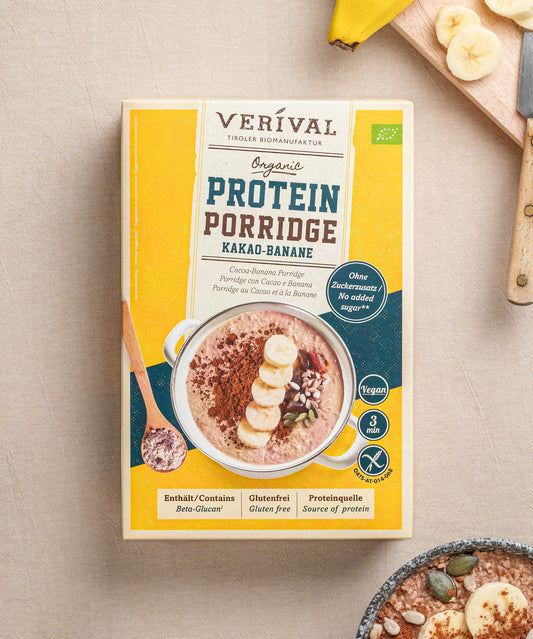
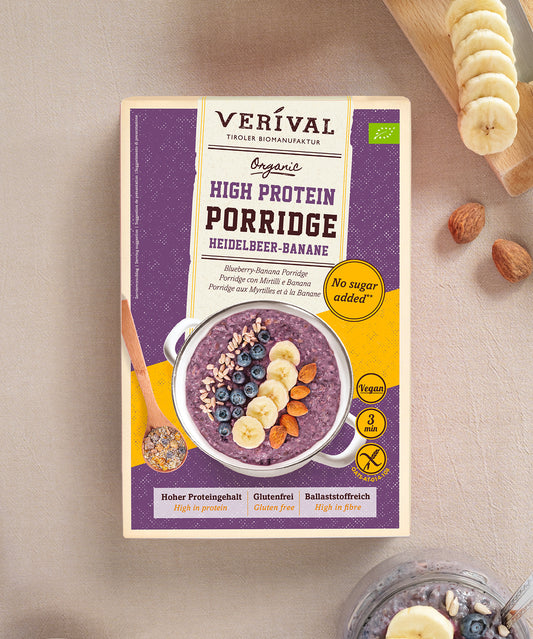
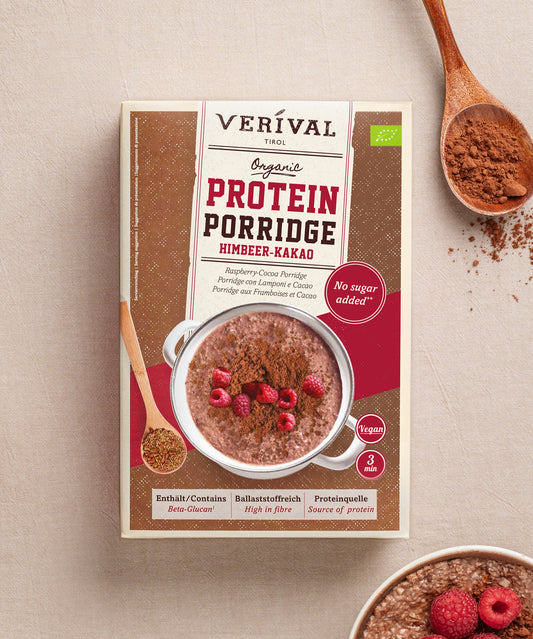
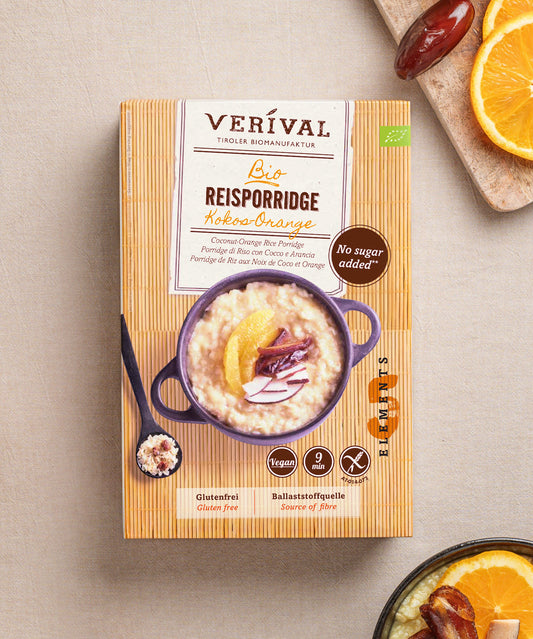
Verival Organic Porridge - Try it now
Frequently asked questions
Which foods have a low glycemic index?
Foods with a low glycemic index are usually less processed and rich in fiber. These include oatmeal, legumes, plain yogurt, berries, apples, nuts, and seeds. They usually lead to a slower and more even rise in blood sugar.
What does the glycemic index tell us?
The glycemic index indicates how quickly and how much a carbohydrate-containing food raises blood sugar levels compared to pure glucose. A high value represents a rapid increase, while a low value represents a more steady response. However, it only assesses the effect on blood sugar, not the overall healthiness of a food.
Which carbohydrates do not cause blood sugar to rise?
Utilizable carbohydrates generally cause blood sugar to rise because they are broken down into glucose in the body. Fiber and resistant starch, on the other hand, are only partially digested and have little effect on blood sugar. The decisive factor is therefore how quickly and strongly the rise occurs.
Which fruits have the highest glycemic index?
Most fruits have a low to medium glycemic index. Ripe bananas can have higher values because starch is converted into sugar during ripening. Nevertheless, the actual effect on blood sugar is usually moderate in normal portion sizes.