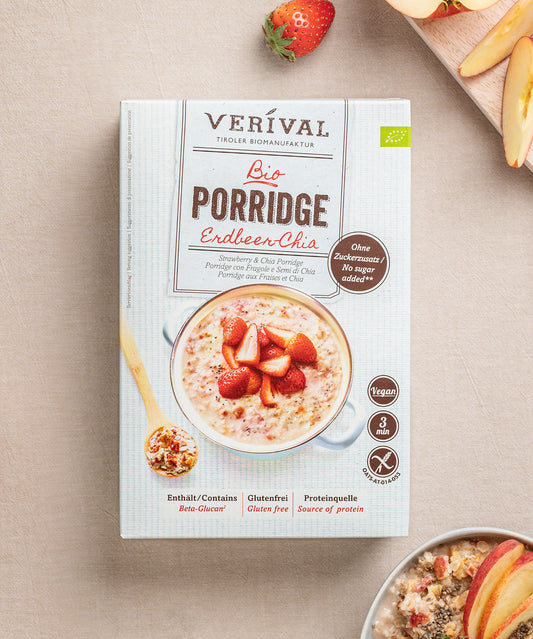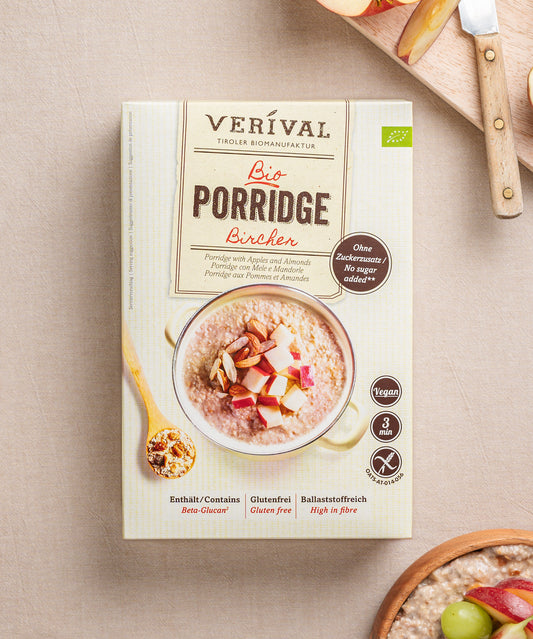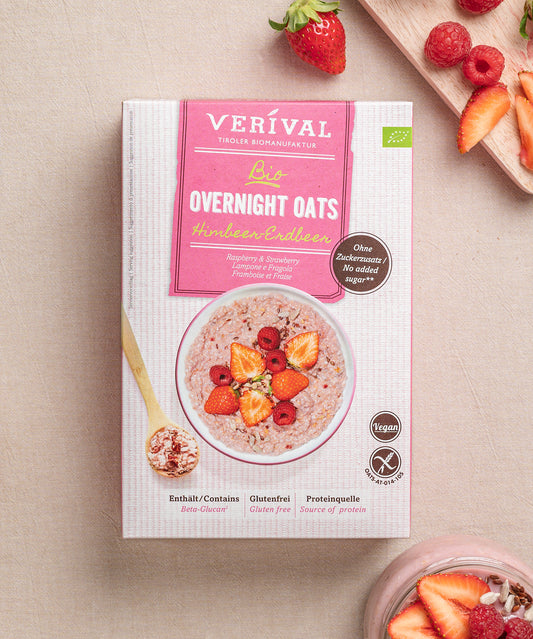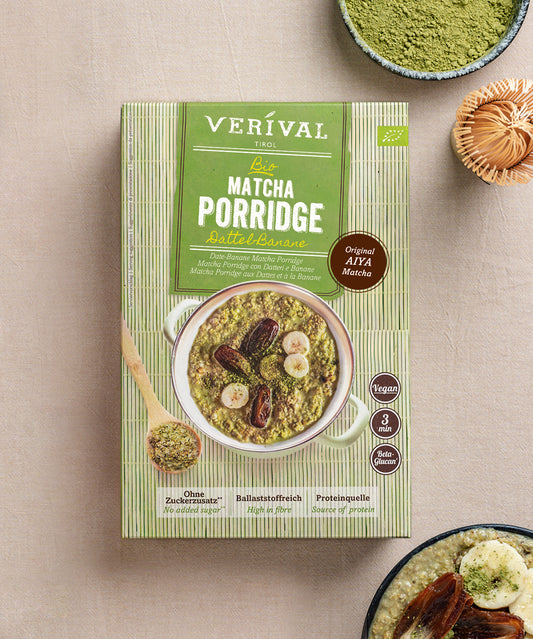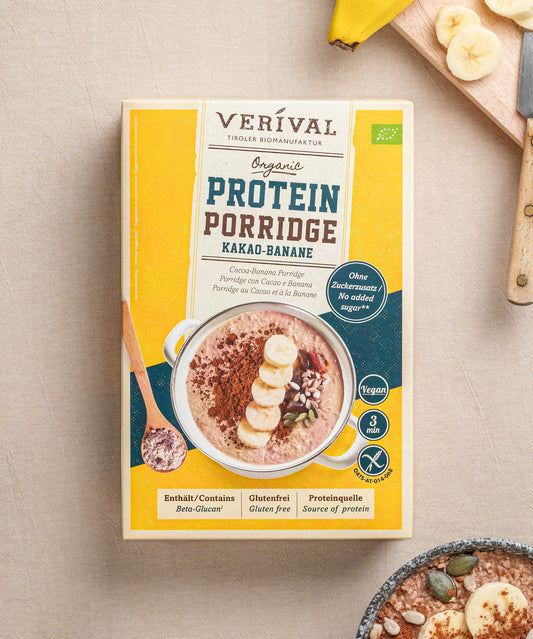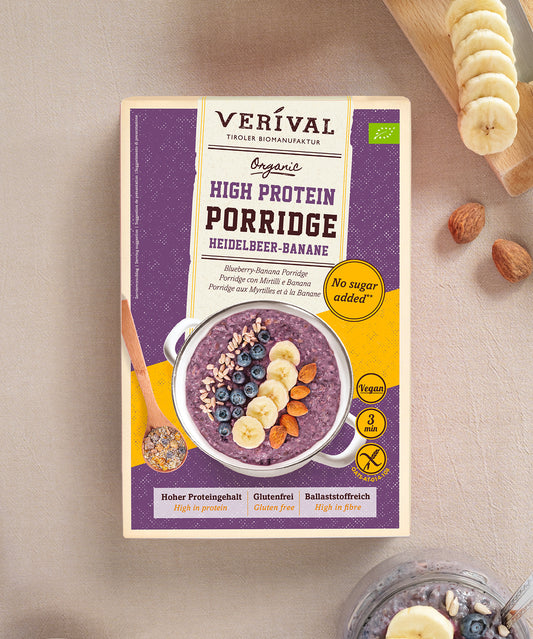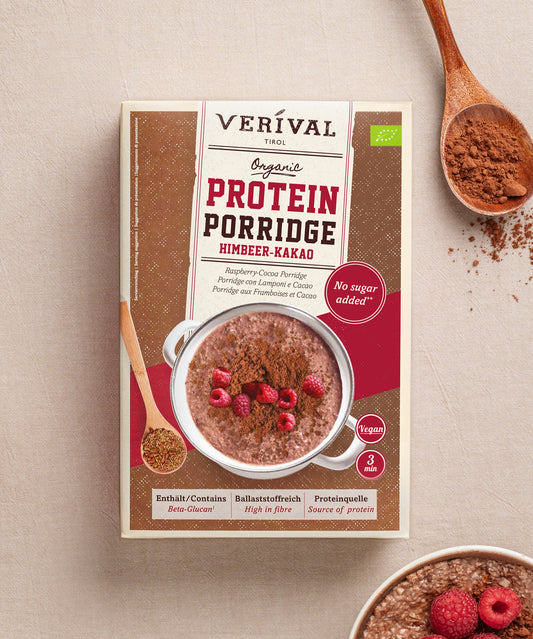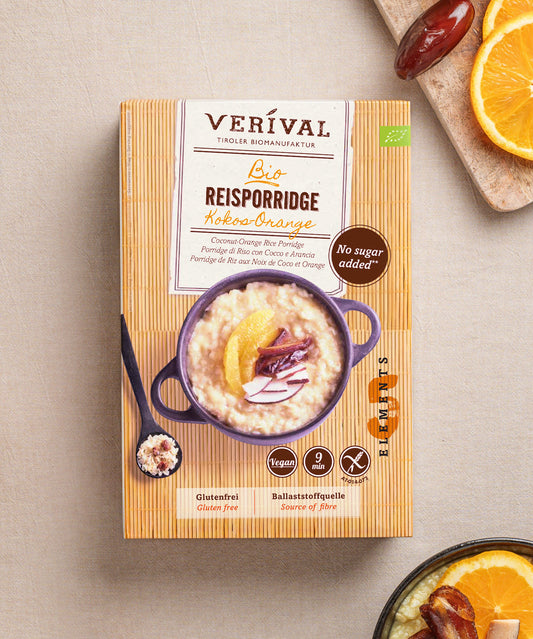

Can a bowl of porridge help reduce inflammation caused by rheumatism? Oats as an anti-inflammatory sound promising, since they contain beta-glucans and plant compounds whose effects are currently being researched. But what has actually been proven in humans? We’ll take a look at the studies and show you how to incorporate oats into your breakfast in a variety of ways.
Verival Organic Breakfast – Discover it now
Why Inflammation Is a Problem in Rheumatic Conditions
“Rheumatism” refers to various conditions. This article focuses primarily on rheumatoid arthritis, in which the immune system attacks the inner lining of the joints. The persistent inflammation can cause pain, swelling, and stiff joints. Without proper treatment, joints can suffer long-term damage. Fatigue is also a part of daily life for many people with the condition.
In addition to medication, many people are therefore interested in their diet. The German Society for Rheumatology recommends the Mediterranean diet as a supplement to treatment. This includes, among other things, vegetables, fruit, whole grains, legumes, nuts, and olive oil. In studies involving people with rheumatoid arthritis, however, improvements in disease activity were relatively small. It cannot be concluded from this that oats alone help with rheumatism.
Oats and Their Anti-Inflammatory Properties
What makes oats interesting nonetheless? In addition to dietary fiber, oatmeal contains plant compounds whose effects are currently being studied. It’s important to distinguish between well-documented effects and possible links to inflammation.
Beta-glucans and Their Effects
Beta-glucans are soluble dietary fibers found in oats. When they come into contact with liquid, they form a viscous mass. This gives porridge its creamy texture and also affects the digestion of carbohydrates.
An analysis of controlled studies shows that when beta-glucan from oat bran or in concentrate form was added to a carbohydrate-containing meal, the subsequent rise in blood sugar was, on average, less pronounced. The extent of this effect depended, among other things, on the amount and processing method. The results therefore cannot be generalized to every bowl of porridge. This does not mean that every bowl of porridge has the same effect. Nor can it be concluded from this whether oats alleviate inflammation associated with rheumatism.
Antioxidants in Oats
Oats also contain avenanthramides. These are plant compounds that are being studied, in part, for their antioxidant properties. In experiments with skin cells and mice, they demonstrated anti-inflammatory effects. However, in those experiments, the compounds were applied directly to the skin. A few small studies in humans found changes in certain inflammatory markers after consuming avenanthramides. However, these studies do not answer whether a typical oatmeal breakfast alleviates symptoms of rheumatoid arthritis.
Effect on Blood Sugar and Inflammatory Markers
The smaller rise in blood sugar in the studies mentioned earlier was also accompanied by a smaller rise in insulin. Insulin helps the body absorb sugar from the blood into the cells. This effect has been well documented for beta-glucan from oats after a meal.
When it comes to inflammatory markers, the picture is not yet as clear. An important inflammatory marker, for example, is C-reactive protein (CRP), a blood test value. A review of controlled studies on oats found no clear overall reduction in the levels examined. While individual studies observed changes, it is not possible to draw a reliable conclusion specifically for people with rheumatoid arthritis. Oats thus offer a well-studied source of dietary fiber for your breakfast, but whether they also alleviate rheumatic inflammation remains unclear.
Oats in the Diet for Rheumatism
Oats can be easily incorporated into an anti-inflammatory diet modeled after the Mediterranean diet. Oatmeal or oat bran form the basis for porridge and muesli, which you can complement with fruit, nuts, or yogurt.
Oatmeal and Porridge
 To make simple porridge, heat about 50 grams of rolled oats with 200 milliliters of milk or unsweetened soy milk and stir until the desired consistency is reached. Berries and a few chopped walnuts add flavor and variety. If you’re short on time in the morning, you can prepare the oats the night before as overnight oats.
Oat bran and muesli

Oat flakes make a great base for your granola. You can also stir oat bran into yogurt or porridge. The difference between oat flakes and oat bran lies in the parts of the grain used: Oat bran consists mainly of the outer layers and the germ and contains more fiber. If you haven’t been eating much fiber, start with a small amount of bran and drink plenty of fluids with it.
Combining with Anti-Inflammatory Foods
Berries, apple chunks, and nuts add variety to your porridge or muesli. Walnuts and ground flaxseed also provide plant-based omega-3 fatty acids. If you like it creamy, add plain yogurt or an unsweetened soy alternative. This makes it easy to combine oats with anti-inflammatory foods.
Practical Tips for Daily Use
Keep rolled oats, nuts, and ground flaxseed on hand, and add seasonal fruit as needed. On busy days, you can prepare a jar of overnight oats in the evening or mix up a simple muesli with oats and nuts. When buying pre-packaged muesli, check the ingredient list carefully, as added sugar is often hidden in seemingly healthy foods.
If you notice symptoms after eating certain foods, you don’t need to eliminate entire food groups on your own. Discuss persistent symptoms or major dietary changes with your doctor. In cases of rheumatoid arthritis, diet can complement medical treatment. However, medication and regular checkups remain essential for treating inflammation and preventing joint damage.
Verival Muesli with No Added Sugar – Try It Now
Frequently Asked Questions
Is oats good for inflammation?
Oats contain plant compounds that have shown anti-inflammatory effects in laboratory studies. However, there is currently no evidence that consuming oats reliably lowers inflammation markers or alleviates rheumatic joint inflammation.
What is the most powerful natural anti-inflammatory?
No single food can be identified as the most powerful natural anti-inflammatory. For rheumatoid arthritis, the German Society for Rheumatology recommends the Mediterranean diet as a supplement to treatment. However, it is not a substitute for medication.
Can oats cause inflammation?
The studies mentioned in this article provide no evidence that oats generally cause inflammation. If you notice symptoms after eating them, consult a doctor to determine the cause before eliminating entire food groups from your diet.
Sources
Sur, R., Nigam, A., Grote, D., Liebel, F., & Southall, M. D. (2008). Avenanthramides, polyphenols from oats, exhibit anti-inflammatory and anti-itch activity. Archives of dermatological research, 300(10), 569–574. https://doi.org/10.1007/s00403-008-0858-x
Zurbau, A., Noronha, J. C., Khan, T. A., Sievenpiper, J. L., & Wolever, T. M. S. (2021). The effect of oat β-glucan on postprandial blood glucose and insulin responses: a systematic review and meta-analysis. European Journal of Clinical Nutrition, 75(11), 1540–1554. https://doi.org/10.1038/s41430-021-00875-9
Kim, S. J., Jung, C. W., Anh, N. H., Kim, S. W., Park, S., Kwon, S. W., & Lee, S. J. (2021). Effects of Oats (Avena sativa L.) on Inflammation: A Systematic Review and Meta-Analysis of Randomized Controlled Trials. Frontiers in Nutrition (Lausanne), 8, 722866. https://doi.org/10.3389/fnut.2021.722866